
Deploy capital and launch units
Once capital lands, two questions follow: what did the money actually buy? and how fast did the units start earning? Capital deployment answers the first with plan-vs-actual; the Launch program answers the second with dated milestones.
Plan the capital, reconcile the spend
Section titled “Plan the capital, reconcile the spend”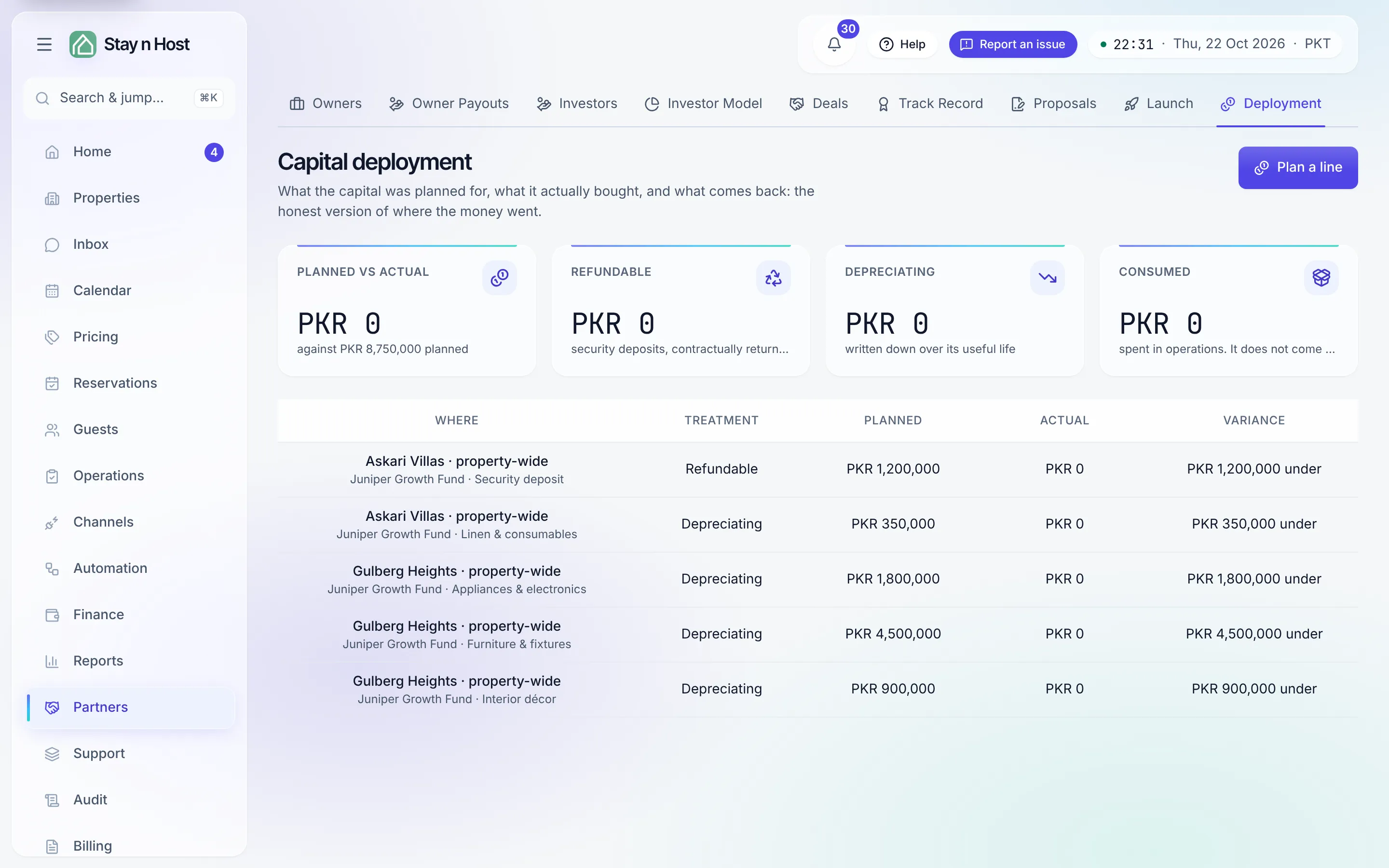
-
Click “Plan a line”: whose capital, which property, which category, and the planned amount. The categories are the agreement’s own - security deposit, advance rent, furniture & fixtures, appliances & electronics, interior décor, linen & consumables, general capex.
-
Note the treatment - it’s derived, not chosen. Each category is Refundable (deposits come back in cash), Depreciating (written down over its useful life), or Consumed (spent in operations; it doesn’t come back). It has to match what the ledger actually does to the money, so there’s no control to override it.
-
Let the actuals flow in. The actual side is the asset register: as purchases are recorded there, each plan line fills in and the Variance column reads on plan, over, or under.
Launch the units
Section titled “Launch the units”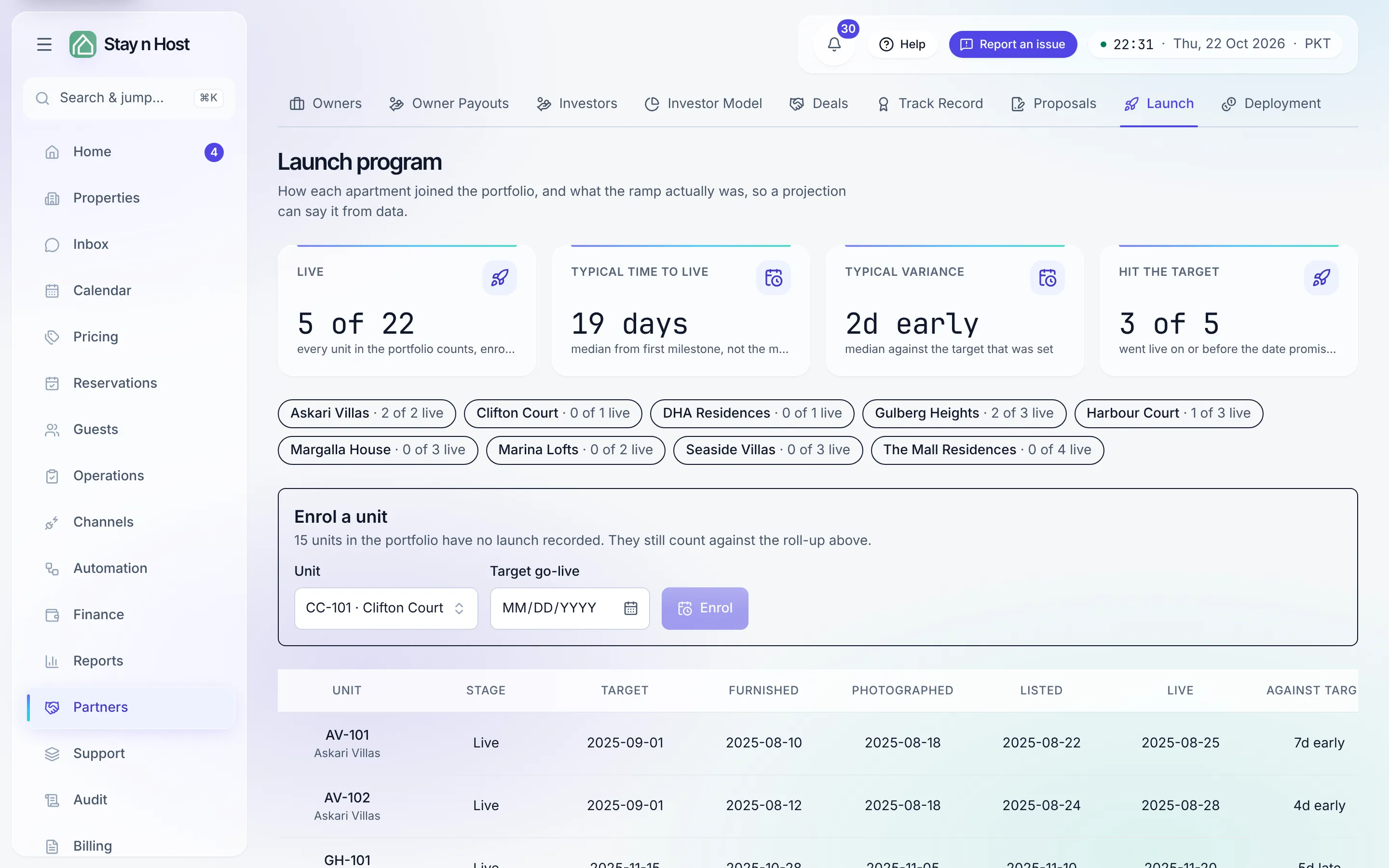
-
Enrol each unit with a target go-live date. Un-enrolled units still count against the roll-up - a unit can’t escape the denominator by never being enrolled.
-
Stamp the four milestones as they happen: Furnished → Photographed → Listed → Live. Dates must run in order - a unit can’t go live without being listed; that one is definitional, not procedural.
-
Read the ramp: Live (N of M - every unit in the portfolio counts), typical time to live (the median, so one stalled unit doesn’t skew it), typical variance against target, and how many hit the target.
What’s next
Section titled “What’s next”- The register behind the actuals: the asset register at
/assets. - What the investor sees of all this: What the investor sees.